Showing posts with label Syria. Show all posts

Monday, 30 November 2015

Leaders Bored: Syria, Corbyn and Foreign Affairs as Domestic Kudos

Syria has bubbled up to the top of the political agenda and news bulletins once again. Whether we act or not, it’s seemingly more interesting to us because of what it means for the leaders on either side of the UK political spectrum, rather than for what is happening – and what might happen – on the ground or in the air in Syria.

When it comes to our response, we’ve been here many abortive times before. The short version is, as a rule: yes, it’s terrible, yes, it’s been going on in mass, bloody daily civilian death tolls since, gosh, 2011 (back when people were self-immolating and we got all excited about an Arab spring), but it’s complicated. Yes it’s a 200k+ body count about now, yes Assad’s bad, but ISIS are worse (and also huge and complex – vaccinating and handing out aid with one hand and killing soldiers, journalists, civilians… with the other). Plus there’s all the other groups, and trying to decide if some, all, or any of them are preferable to Assad or Isis is too nuanced and verbose for anything that could be pitched to the nation prior to bombing the fuck out of shit. We would like Assad gone, worded carefully, but we don’t want Isis to take his place.

Westminster clocked up 2hrs 40 on the subject on the 26th, though. Suddenly ISIS in Paris became ISIS in Syria.


[I hate to be inversely unpatriotic, but surely they did have their way, and they chose Paris].

"I can't stand here and say we are safe from all these threats. We are not. I can't stand here either and say we will remove the threat through the action that we take. 
"But do I stand here with advice behind me that taking action will reduce and degrade that threat over time? Absolutely and I have examined my conscience and that's what it is telling me."

Will this lens be enough to push a vote in for action?

2013 gave us demonstrations and a no vote in the commons for any action over Syria. Not another Iraq, we said, Libya 2011 airstrikes notwithstanding. Radio 4 would have weepy pieces about teachers who didn’t have to worry about their retarded pupils (they’d missed so much school from bombs/airstrikes they were mentally backward by preteen) any more (one last strike had blown up the school with the kids inside).

But that was then. Now we have a Labour leadership poised for self-destruction. So while there was a protest over the morality/effectiveness/motive behind Syrian intervention, the rights and wrongs of it are less interesting, it seems, than whether the Labour party agrees with Jeremy Corbyn about it all.

Who’s for and against action in Labour, who’s giving the juiciest quotes about dissention. Who’s namechecking Bolsheviks and dark ages and describing shadow cabinet meetings with all those words like brutal and bloodbath and hell and other things in all those disembodied quotes that always make for cracking news slots.

The former ministers are the ones who get to give the media what they really want. JC should resign! “How does Jeremy Corbyn and his small group of tiny Trots in the bunker think they've got the unique view on it all?” – mixed far left and right imagery there.


Reading that back, stickler here, but I can’t help thinking that there’s either a ‘free vote’ or no vote at all.

But Corbyn was, it seems, bullied into the free vote, having thought to impose a three line whip to make sure the party toed the line. It seems a shadow cabinet meeting put paid to this:


And bullying apparently works both ways. Over eager left leaning supporters have been quite free with their angry encouragement/threats to airstrike supporters, including anti-war protestors sending a photo of a dead baby to an MP with a note to vote against the strikes - you know, like those illustrated, 250% opinions you get from certain contacts in your Facebook feed, when young, bright enthusiasm ends up hurting people, or at least their feelings.

Just because the youth and passion for your cause is pure and looks so winning and admirable (which is supposedly why the parties put people like this in charge of social media and smaller party/public interface roles), it doesn’t necessarily follow that the ways and means you come up with to express and act on that young (perhaps green) passion will be pure, or even particularly nice.

And on the other side there’s the rather unfortunate and hawkish: you’re either with us or with them. Once David Cameron says ‘terrorist sympathisers’ in a speech there’s no way of backing down or qualifying who was being referred to – if you use the term then you’ve allowed yourself the easy, mindless motivational soundbite and a disingenuous, fictional polarised rendering of the situation. If you object to military action against a terrorist group then you support the terrorist group. There’s another one of those 250 percent opinions. And see the ‘I’m a terrorist sympathiser’ social reaction.

It’s high stakes, though, isn’t it? David Cameron needs enough labour MPs to vote yes to cover his Tory dissenters. So the vote is to be timed for maximum support.

And it’s a long old one, though. Wednesday is to be the debate and vote, running from 10:00am to 11:00pm and some. Just imagine all those thick papery Few Good Men case studies the young, up and coming and caffeinated backroom boys are preparing round the clock right now. A precedent for every eventuality. These are the leader quality politicians of ten years’ time or so – this is what Cameron, Osborne, Burnham, Miliband et al would have been doing 15-20 years ago, for the Majors and the Portillos and the John Smiths.

Though it is a shame that career paths and the fate of a country and its people have to be so intertwined. Why is a fusty crisis of cabinet aggravation with mildy annoyed complaints from hitherto unheard of MPs to the media more interesting than what happens on the ground in foreign affairs?

Maybe it’s a leadership/ election thing, maybe when we’re all excited about how our domestic politics is going to turn out we have to go for this angle. Any foreign policy stuff becomes about the policy makers, not the foreign situation. So American foreign policy is now rendered through the Obama-before-the-election lens. Sort of, ‘what does Donald Trump say about it?’

The leaden gravity of the situation and the bloody reality of life and death on the ground in Syria aside, it’s not as if it isn’t exciting as an international relations gig, either. We’ve got a ‘we’re next!’ approach to the Paris attacks, with DC putting us at the top of ISIS’s hit list, so we may as well defend ourselves. (C4)

Do we think it will go Cameron’s way? Which IS Cameron’s way, exactly? Is he using ISIS outrage to try and get through what failed the last time? The government and the people opposed military intervention in Syria in 2013. “I get that” Cameron said in immediate response, with clear anger and frustration.

Of course, as with Iraq, where a humanitarian crisis was trumped by terrorism concerns, only to become once again about a humanitarian crisis when the terrorism threat looked a bit weak in retrospect, Syria never quite cut it as a humanitarian crisis we should put a stop to. It took the threat of ISIS for a convincing case to hit Syria to appear. We’ll worry about their territory in Iraq and elsewhere another time, perhaps.

Sunday, 31 August 2014

Dumbfounding Violence: Photojournalists in War


Photojournalists: those images, man…

Girl post-Napalm, bullet to brain, grinning atrocities and abominations. Corpses that teach you anatomy and living people posing with shit that’s so wrong you can see how you’d have to be flip around it. And these guys and gals with cameras walk round everything with (damaged) rock star ease. Doing their job and putting their minds and souls through the wringer.

But it’s not just dispassionate (the photographer that link takes you to was killed in Afghanistan in April).

The love or the need or the drive or the duty to do it. You have to photograph, to report. Stick the camera in people’s faces. And these people know why they need to look into the lens and be the subject, too. Everyone feels it. This stuff won’t fit words; images and footage need to come out of the mess and stick well-spaced pins in people’s moral maps.

Video doesn’t always work in war. We know what frame-by-frame explosions look like – they’re things actors run out of with a bit of dirt make up on.

But the stills camera‘ll show you the percentage of body that’s GONE in an explosion. The dead body hurled into a tangle somewhere with a very alive expression on the face. Just how monochrome a person covered in the dust of a pulverized building looks.

So why kill them, photojournalists? (Still and moving pictures). They are neutral. Those fucking images are neutral – neutralizing. They annihilate war. They speak for themselves and they speak for neither side.


That was October 21st 2012. The photographer, Fabio Bucciarelli, won the photo category of the Bayeux-Calvados Award for war correspondents the following year:
“I haven’t been back to Syria since then,” […] “The situation has been by far too dangerous in the last few months. The Syria war is a huge massacre against civilian populations. I know people who have been kidnapped there, like James Foley. I hope this award will help to make the people remember them, and remember all the innocent victims of this terrible war in Syria.”


This was one of many mentions James Foley got while he was still alive and a hostage (he was kidnapped on Thanksgiving 2012). Grisly, much-exploited murder done, he is now the first American journalist to have been killed in the conflict.


The Committee to Protect Journalists counts 67 journalists killed in Syria since the civil war began. They’ve named the country the most dangerous place in the world for journalists on the job.

But what a job, though. Foley’s last report for the GlobalPost has that potent, civilian-centric angle where he stands back, editing and punctuating devastatingly:
‘As Sayed recounted his near-death experience, he smoked a cigarette and tears welled in his eyes. Patches of gauze were still taped to his neck.

“You know one of the FSA leaders from Maraa?” he asked. “They go into the free area when there’s fighting in Salahhadin. I see them taking screens, computers, telephones, everything they can lay their hands on.”

He said he's seen civilians executed after rebels recklessly accuse them of being mercenaries for the regime.

“I saw one beaten to death,” he said. “The FSA didn’t check their facts, and now he’s dead. I know the man. He was 46. He has five children.”

“We have lost the civilians now,” he said, exhaling smoke.’
Less than two years before his Syrian kidnapping Foley’d been kidnapped in Libya – all sand dunes, Gaddafi forces and rifle butt beatings. South African photographer Anton Hammerl had been shot in front of Foley just before and was left to die from his wounds in in the desert: "I'll regret that day for the rest of my life. I'll regret what happened to Anton, […] I will constantly analyze that."

Foley was released, went back to the States to raise money for Hammerl’s widow and family, and returned to Libya to catch the successful hunt for Gaddafi. Not just closure but being useful: he helped source footage that showed that Gaddafi’s death was something more calculated than the firefight rebels initially claimed it was, prompting a UN investigation.

The night after Gaddafi was killed Foley polished off a bottle of Johnny Walker with Human Rights Watch’s Peter Bouckaert.
“I don’t have any pictures of Dana, but there’s not much chance I’ll forget what he looked like, that front-line face, he never got anything on film that he didn’t get on himself, after three years he turned into the thing he came to photograph.”
Michael Herr’s Dispatches is a devastating hoard of written combat photos itself. And he talks about the photojournalists around him. I think this was why James Foley resonated – something reared up from Sean [son of Errol] Flynn and Dana Stone’s capture/disappearance in April 1970 (Flynn was declared dead some 14 years later):
“I have pictures of Flynn but none by him, he was in so deep he hardly bothered to take them after a while. Definitely off of media, Flynn; a war behind him already where he’d confronted and cleaned the wasting movie-star karma that had burned down his father. In so far as Sean had been acting out, he was a great actor. He said that the movies just swallowed you up, so he did it on the ground, and the ground swallowed him up (no one I ever knew could have dug it like you, Sean), he and Dana had gone off somewhere together since April 1970, biking into Cambodia, ‘presumed captured’, rumours and long silence, MIA to say the least.”
(Michael Herr, Dispatches (London: Picador, 1979) p. 256-7)

Wednesday, 30 July 2014

Syria: One Man's Freedom Fighter is Another Man's Son is Another Man's Terrorist


“What draws these young men — and, to a lesser extent, women — to fight are what they regard as the indiscriminate killings of Muslim children, women and men in Syria. The use by President Bashar al-Assad’s regime of industrial-scale torture, barrel bombs and chemical attacks evokes a strong desire to defend fellow Muslims.”
Chams Eddine Zaougui and Pieter Van Ostaeyen,
‘
Overblown Fears of Foreign Fighters,’ New York Times, 29th July 2014

ISIS is the acronym you get if you don’t translate it as ‘Islamic State of Iraq and the Levant’ and instead put Syria or al-Sham on the end. The name only emerged out of al-Qaeda and other groups last year.

The UK Government outlawed Isis on 16th June, making it illegal to associate with the group or give it financial backing. The US had already designated it a terrorist organization.

On 29th June Isis became ‘The Islamic State’ in name after declaring its captured territories in Syria and Iraq to be a new… Islamic state.

Isis/The Islamic State is all contradictions – a smaller version of the mess of conflicting ideas, pros, cons and dilemmas facing anyone who tries to pick a particular group of combatants to ‘like’ in Syria. It’s never as simple as knowing their stance on Assad. Isis is fighting the brutal Assad regime. But Isis itself is being brutal to its opponents. Isis administers aid, food and healthcare to Syrians. But Isis is threatening Christians who don’t leave Iraq. Isis blows up rival’s mosques and shrines.

Isis crops up in the news in two ways: its activities in Iraq and Syria …and the profiles of young Muslims from the UK and the West who come to join the fight.

Call of Duty


In November 2013 23-year-old Ifthekar Jaman from Southsea appeared on Newsnight: “I am ISIS. This is the group I am with. We are trying to establish the law of God, the law of Allah.” Footage of him from a year earlier showed a member of the Portsmouth Dawah Team – a community organization spreading the word about Islam (all leaflets and friendly chats over a little table in the high street). His smartly turned out younger brother displayed a quiet pride in his brother’s subsequent journey to Syria.

There were lots of tremors from MI5 at the time. The number of Britons in Syria was in the low hundreds. They were being greeted by al-Qaeda out there: “they meet British citizens who are willing to engage in terrorism and they task them to do so back at home, where they have higher impact, in this country. We've seen that played out in previous plots here, including 7/7.” In December Jaman’s family reported that he had been killed. He’d already said not to worry about his threat to the UK – he wasn’t coming back.

‘Canadian jihadist’ Andre Poulin made the news in January – he’d been killed in August 2013, during an attack on the government-controlled Mennegh airport in northern Syria. Reports described his life prior to leaving Timmins, Ontario: soon after converting to Islam he’d moved in with a Muslim man, attacked said man for living an un-Islamic lifestyle, had an affair with said man’s spouse, and threatened said man’s life and pulled a knife on him (sucks to be said man; he even wanted to give Poulin – as a young, fragile convert – another chance).

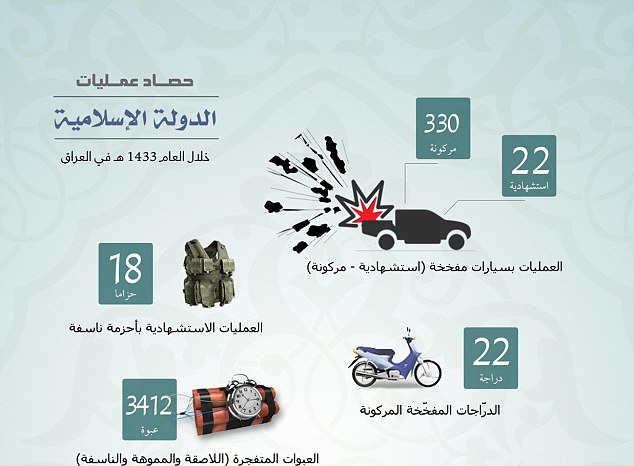
The Islamic State has since released a devastatingly slick video in tribute to Poulin. We don’t seem to like dusty Middle East militants having HD cameras and an eye for editing – it seems to unsettle us more than their killing proficiency (Isis produce bombing infographics, too).


The Daily Mail’s recycling of a New Yorker article there. The NY even got hold of a games and media entertainment expert, who noted that our passive office work and lack of having to fight bears in the food gathering process left us with a hole to fill in our lives – the only thing that hits the spot being rapid decision-making pumped full of adrenaline by a combat situation. They’re not connecting this observation to fighting in terrorist designated organizations for real, no - just putting it right alongside there.

And there have been French and German and American and Finnish and Danish and Australian and… all leaving their homelands to join team Isis. A 19-year-old woman fell in love with an Isis fighter online and decided to quit America (Denver, if that doesn’t downplay the decision) to be with him, providing medical aid to his camp and a little combat. Poor love got arrested at Denver International.

Not all the Western fighters go to Isis, though. In April 18-year-old Abdullah Deghayes from Brighton made the news when he was killed in Syria. Vice filmed with his brother, 20-year-old Amer, also in Syria: “I came to Syria to answer the call of duty, and that is to give victory to the religion of Allah. And the way to do that is to help the oppressed Syrians here.”

His 16-year-old brother Jaffar is there, too. Their father Abubakr wanted, and still wants, them to collect aid (medicine, food, clothing) – helping Syria from the UK. He didn’t know his sons were planning to go to Syria (well, he thought he’d convinced Amer to stick to doing aid work in the country).

“In the situation that we’re in today, parents go to a level of selfishness where they would see the situation in Syria as to do with Syrian people. They’re not willing to allow their sons to go there and do what they have to do. So really parents are the last people you would tell.”

(Amer)

At the time of Abdullah’s death William Hague was all: “I want anybody who is contemplating going to Syria for any reason to hear that advice very clearly from the British Government: do not travel to Syria.” Elaborating, his advice nicely offset “the dangers [in Syria] are extreme” with the observation that people returning from the conflict were an “increasing threat to our own national security.” It was almost presidential in its good and bad cop PR schizophrenia.

The government’s haphazardly-policed stance is that Britons returning to the UK from Syria will be treated as terrorists. There have been deprivation of citizenship orders – 20 new ex-Britons in 2013. There were 16 arrests and warnings of more in January. The Met took a gendered approach in April – asking Muslim mums to have a word with their boys or (in confidence) the police: “This is not about criminalising people. It is about preventing tragedies.”

Meanwhile President Obama wants $500 million to train ‘vetted’ Syrian rebels - helping Syrians defend themselves against the regime’s attacks, as well as stopping the unrest from spreading to Iraq and upsetting the region.

The semantic battle between freedom fighter and terrorist has run on and on regarding Western combatants in Syria. On 30th July Radio 4’s The Long View examined them alongside Britons who went to fight in the Spanish Civil War in the 1930s (the Guardian actually beat them to it regarding that comparison).

Some view the whole Britons in Syria thing as a frightening radicalization that warrants passport revocation; others see a perfectly impassioned desire to help an oppressed people – no more radical than being human. As ever, it’s a bit of both, and not very representatively depicted in the news reports taking either angle.

Of course there are posturing kids (“One day the flag of tawheed will fly over 10 Downing Street and the White House”). Of course there are lovely, do-gooder types just trying to make a difference, and of course there will be some of Norman Tebbit’s ‘poor little creatures,’ who are all too easily manipulated into doing or attempting other peoples’ bloody deeds in Britain and elsewhere.

And then there are those who fall into the manipulator’s ‘opposition’ category, who don’t receive the PR, and who get brutally forced into their emotions:


It’s terrifying. Call of Duty? No matter how powerful, in charge or strong you make a person, it’s always just a petty, insecure demand for respect sitting on top of the might.

Saturday, 28 September 2013

What is it Good For?


Libya 2011 bemused. All the arguments they, our leaders, were making could have been made of other places, were truer of other places. It seemed inevitable we were going in and it sounded insincere. But the peaks and troughs of our interest in Syria over the last two and a half years? A month ago we had the chemical attack, the Commons no vote and the resultant ‘not another Iraq’ comments and protests, seemingly overlooking Libya.

Even that threat of intervention seems to have been just another peak. We’ve returned to vigilant condemnation, having reproachfully noted the umpteenth serious/shocking escalation of the conflict. But I suddenly catch myself considering Syria as a ‘better example’ of somewhere to intervene in, and realize what I’m tacitly calling for as a consequence – whether it be a no-fly zone, bombardment or an invasion.

‘War is a crime against humanity. I renounce war, and am therefore determined not to support any kind of war. I am also determined to work for the removal of all causes of war.'


Try as I might, ‘And yet…’ seems to define my response to the above. I find I can state the first and last statements with ease, confidence. Probably most members of the public, the political world and the armed forces would agree with them at least nominally, in principle. But I have a problem with the middle one. And I have a problem with the fact that I have a problem with the middle one.

It’s always been a grey area, I’ll admit. War is awful. Killing a human being is so viscerally repugnant. The insanity of one life judging that another should end, of ranking life so highly in survival efforts and yet ending other lives as part of that survival – ending the same life in others that you value so highly and protect so much in yourself and your people. It’s a terrible thing to do and a terrible thing to have to do (and yes, ‘have to do’ is a loaded description). Sending troops in knowing they will both do this and be the victims of it is the highest level of inhuman arrogance at worst and detachment at best, detachment from the most precious thing we have. Consider your own death, decades of consciousness into oblivion, as someone else’s decision, with them numbed by strictly tactical thinking – and you numbered by it.

And yet… the strategic engagements and the inevitable killing the armed forces do to limit a war, or to intervene in a humanitarian crisis at the hands of militias, depots or terrorists, are not things I’m prepared to completely come out against. I always allow a sort of settlement with the conflicts; one where I think that war was what the other chap was doing.

It’s a convenient way of attacking war and warfare while not actually going anywhere near criticizing what the armed forces do. Hitler, Saddam, bin Laden… look what you made us do. This allows me to keep my conscience relatively clear and have it both ways. I am able to acknowledge that both forces’ part in the warfare and killing, theirs and ours, was a terrible thing, and can do so without attacking the military’s actions or very purpose. What we did was an abhorrent last resort that we had to fall back on because of the impossible position the other person left us in. All the killing and horror that occurred during combat is laid at the door of the person who caused a situation where we had to fight. This is also how the criticism of the politicians goes – they who will happily take us into wars when it’s the armed forces that have to fight them.

With a conflict in place the forces are brave because they go into impossibly bad situations. Impossibly bad not just (just!) because of the danger but also because these are places where there is a total failure for everyone else on the planet, a situation that no one can touch. Invasions of countries, civilian deaths and hardship: situations where the knowledge that killing is wrong is neither any help to the people dying nor any hindrance to those killing; situations where all the possible solutions are themselves abhorrent, where morality has to be ranked, utilitarian; situations where the forces’ response is going to involve death – killed and killing – but less death – killed and killing – than there would have been. These situations give the armed forces a context, their raison d’
être.

Whether I’m attacking al-Qaeda and the Taliban for their bloody provocation, provocation which killed civilians, East and West, and which drew our forces into an ugly conflict with ugly fighting, or Blair and Bush for sending young men to die in Afghanistan and Iraq for reasons that seem forever in flux, I never stop to think: what would the armed forces do if these people didn’t start it all?

When it’s bald like that, without the enemy, I suddenly feel awkward. Because then the only thing left to say when you give your ‘war is wrong’ speech is that the force is wrong: the guns, explosives, and the men and women who sign up for it.
 
It hits me more with remembrance and memorials. War: what they were in was wrong; what they did was brave. It looks so easy, put like that, but there is far more of an overlap, with pro and anti war/militarist sentiments moving in. A clearer distinction might be War: what they were in was wrong; what they did was wrong; that they were faced with having to do it, and did it, is what makes them brave. Politicians’ speeches praising the efforts of the forces, punctuated with negative-sounding adjectives about war and conflict, tend to leave a disingenuous gap in the middle where somehow the wars, which are wrong by nature, seem to have been fought with admirably good warfare. Perhaps if warfare were not what it actually is then it would be a good thing.

How can one reconcile the view that warfare is a terrible last resort, carried out by brave people doing an awful-by-nature job, with the ‘I’m proud to fight for my country’ sentiment? It is certainly acknowledged and appreciated when we commemorate the forces and make speeches about them. So can we appreciatively cite a combatant’s pride if we think conflict is terrible? Can you be proud to do a terrible job, or does the pride suggest you don’t think the job is terrible?

Warfare takes the armed forces into wretched situations, and what they have to do in those situations is awful – combat, facing horrendous permanent injury and having to kill or be killed. People are brave, are heroes, if you like, for being prepared to go into these situations and do these things, but we shouldn’t clumsily invert that and try to suggest that the things they face are heroic. The fact that they fought is brave, is worthy of pride, praise, acknowledgement and remembrance; their fighting is not.

You are not a hero for fighting the enemy, but for being prepared to. If we think participation in warfare is anything other than the worst human situation on earth then we are condoning conflict and downplaying the risks to and bravery of the forces.

Going back to the second statement from the Peace Pledge Union, I do not ‘support’ any kind of war or any particular war, whatever stance I might adopt case-by-case. I acquiesce to the West’s part in certain conflicts in a lesser of too evils sense. And my tentative ‘yes’ is obviously given from the safety of personal opinion as a member of the public, uninvolved in either combat or in making the call, or not, to intervene.

Perhaps pacifism is just theoretical. But it is there, in your head, to be considered or ignored. The fact that we have armed forces and people who will take up arms makes conflict an option for political decision makers, or any type of leader – more of an option. Armed forces perversely make war both more likely and less likely, both cause and end wars. War exists, so the forces have to exist to fight, limit and end them, but if the forces didn’t exist then wars couldn’t exist. Arguments in favour of the armed forces are like those of nuclear deterrent: it’s not us; it’s them. We don’t want an army ourselves, but while other countries out there pose a risk to us, or to the democratic world, we need our army to defend us/it. But, theoretical or not, if no one joined the armed forces or took up arms, in any country, combat would not be an option for anyone, whether they be a right-minded democratic government or a genocidal tyrant – assuming tyrants could exist without armies.

In the practical meantime, where wars exist and the brave sign up to fight them and lessen their effects, we have to return to blaming the person, the people in charge, rather than the force. The terrorist leaders, the hateful self-appointees, the life-trampling despots, the trigger-happy political monsters with bloody hands and bloody egos spitting from Westminster and Washington and the rest of the world. They don’t fight for us; their words don’t speak for us. These people will often talk about the debt we owe the armed forces. They owe them a damn sight more, not least in terms of apologies and explanations.  

Thanks to Ajit for inspiration, and this: