Showing posts with label Brighton. Show all posts

Friday, 17 July 2015

The Grass is Always Greener – ‘Quiche’ at the Marlborough Theatre, Brighton


‘Quiche’ is a comedy by Frank McHugh.

The tl;dr version is ‘Brilliantly executed laugh out loud comedy with well-placed bittersweet-ness.’
The cast, writing and production are excellent and if you go you’ll have a thoroughly good night.

If you want more…


What do men and women want? They’re after one thing, right? Right…

‘Quiche’ offers two couples (perhaps more) and yet it really shows four people who are alone.

It doesn’t matter how nice you make that flat, how many times you move things around or invite people in or turn up the music; you’re still beating against the walls to feel something, anything that isn’t that awful gulf between you and the person you should be deep inside.

Dinner party etiquette. British social status etiquette. You congratulate people on the things you don’t think they do as well as you. To stay charming you admit to the faults in yourself that you don’t think are faults – just like when recruiters prepare you for interviews.

What do they call it? Owning the space? You walk in and you need to be confident, knowledgeable, talkative and competitive. Fail at this and you are getting ‘being in company’ wrong.

But of course they are getting it wrong. Which is why ‘Quiche’ is hysterically funny. These people are not qualified to be as self-assured as they are. Inwardly disappointed and outwardly crass characters hurtle towards sex – which will probably be quite similar in nature.

To get them there there’s inter-couple and intra-couple bitching. There’s bottomless glasses of wine, well-aimed insults, seething stares, hubris, and mixed reactions to the quiche.

Raging alongside are the coping mechanisms for the disappointment. The pride in the job you’re not really that good at or interested in. The men fist bump over echo-chamber recruitment and marketing wank; the women play career-fulfilment top trumps.

And one woman’s faults are another woman’s man’s strengths. You match your candidates to the roles. ‘Match’ is a relative term in Quiche’s world. You’re crying with laughter – and two emotions are causing that.

It’s farce that makes you pay for it. If there’s a pratfall then you’re going to have to deal with the scars it leaves behind. Sitting in audience land, you find yourself trying to suppress the tail end of your barrel laugh to keep up with a gear change into emotional consequences.

It’s life. Your emotions have to take you through some incredibly extreme heights and depths of ridiculous behaviour before you can start to see yourself – and see problems in your life clearly enough to be able to address them.

Quiche starts with four people who are alone. But that’s definitely not how it ends.


'Quiche' is at the Marlborough Theatre tonight at 19:45 and Saturday 18th July at 14:45 and 19:45

Sunday, 30 November 2014

Seasons in the Sun: Seaside Architecture


Pleasure architecture…


...at the seaside, the resorts, the frequented towns: the proms, piers, bandstands, lidos, sun terraces/lounges, pavilions and colonnades, the concert halls and theatres and canteens and restaurants and pools. Everything in Georgian and Victorian and Edwardian and art deco and post-war, Festival of Britain-y. But hopefully deco.

Sun architecture in the places where the sun was sought. Floors and walls with deco’s radiating sunbeams shooting out across them. Stonework with that sort of high contrast, schematic human form carving, fans of lines set in the panes of windows and doors. Grand staircases, decorative balustrades, metalwork and fittings.

“Other materials came to the fore, especially steel and reinforced concrete, used, in the 1920s and ‘30s, to construct a new architecture for the sun, including massive sea defences embroidered with walks and sun terraces, modernist lidos, and minimalist Art Deco pavilions and hotels. Buildings included modernist structures such as the De La Warr Pavilion of 1935 designed by Erich Mendelsohn and Serge Chermayeff and sited incongruously on Bexhill’s otherwise sedately suburban seafront, and the equally out-of-place Midland Hotel, constructed two years earlier to the designs of Oliver Hill with decorative ornamentation added by contemporary artists, on Morecambe’s decidedly Victorian coastal fringe.”

Fred Gray, Designing the Seaside, (London: Reaktion Books Ltd., 2006) p.52

Seaside spaces are generous spaces – they’re cost-free open space. Councils and the philanthropic provide benches and sunken gardens and shelters and toilets and flowerbeds and greens and ponds and water features and… all just there to walk round. Sun terraces with low walls, pillars, urns and benches ringing them. Things that are free for a family to enjoy. Hotels and restaurants with sun lounges the size of football pitches, filled with people who’ve maybe bought a cup of tea for pence and then sat there for hours spending no more. Big generous space and big generous architecture.

Seafront pavilions with theatres: mass seating areas undulating with raised and lowered sections – all railings and geometric patterned carpets. These sorts of buildings have everything writ large. Entrances and fittings repeat like infinite mirror reflections (why have one door, or a large door, when you can have like six (6) little ones equally spaced – confuse people while you make them queue for a bottleneck).


Everything’s impossibly huge. The venues we get now have far greater capacities but with much smaller bars, open spaces, stairs and ceiling heights than the distended open spaces of the 1920s, 1930s… Then you got a wall of glasses behind the bar the size of a double decker bus – in a dance hall with barely a couple of hundred people in it. Modern venues are big, but purposefully – it’s space to match maximized ticket sales, efficient with budget airline seating configurations.

But old venues were built big so that they looked bright, gasp-inducing, impressive – not just to fit more people in. Cubic meters of nothing but air, higher and higher and higher above everybody’s heads. Then some gilt-bombed dome or chandelier or whatever topped it all.

And mechanics – there’d be spinning dance floors and sprung dance floors and self-elevating/descending dance floors (and obviously the cinema organs doing the same).

Features for features’ sake – bridges and raised walkways and phoney trees and outdoorsy-ness – all indoors, for the wow factor that Vegas hotels go in for now. Brighton’s Hippodrome had a plaster Bridge of Sighs in its Palm Court. It’s like it’s theatre. You put in ‘go up just to come down again’ stairs to give the impression of transition.

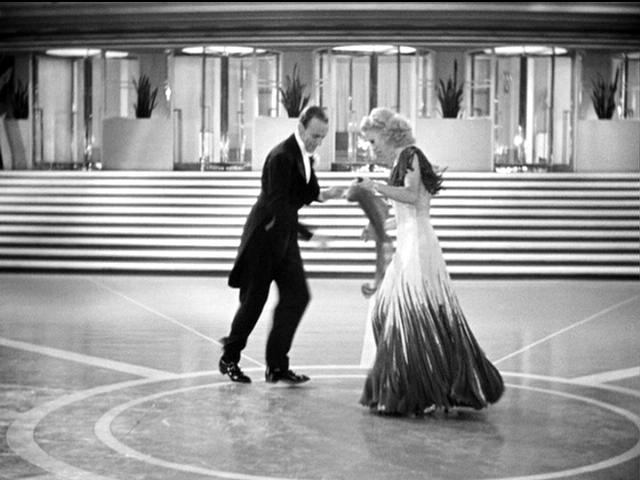
And these Liberace venues – the pavilions, halls, ballrooms, winter gardens… even just the canteens and sun lounges – these are where you’re going to see the architecture and fixtures that turn up in the ballrooms and dancehalls in Fred Astaire movies, or at least the stylized sets representing them in those films.


Today these places, if they’ve survived at all, are converted/updated to suit their aging, original audience – it's all bingo, coach trips and god’s waiting room. But go back then: it looks like holiday. Like American yet European yet American FUN. Bronzed, stylish, leisure. Effortless life, sophisticated and choreographed and genteel and nice.

And that architecture is in the cinemas too – the palaces showing the movies that mix the dance/deco/drink architecture and music and lifestyle and dress code. Brighton’s Regent Cinema actually had the whole set: the deco building, the silver screen, the swanky restaurant/bar and, topping it all, the (sprung) dance floor – you could watch and live the movies (aptly enough, the last film the cinema got to show before demolition was the dance-happy Cabaret).

Living the movies… Onscreen it’s all about dancing with my girl. Bunking the fare to find that girl. Seeing my boy/girl to explain the misunderstanding before he/she goes and it’s too late.

I guess the gender portrayals are a bit unfortunate. The guys won’t stop until they’ve swept the women off their feet and the women tend to, underneath it all, really rather like getting swept off their feet.

You start with pre loved-up guy showing off with his male friends/colleagues (‘There ain’t nothing like a Dame’ or something). Lead guy narrows it down to one woman he genuinely likes; tells her. She tips a drink over him (literally or metaphorically) before catching a quick, unnoticed glance at him as she’s walking off, utterly flattered and willing. Ensuing mess of his public bravado versus her private wisdom regards love/life, lots of tenderness then arguments then back again between he and she, then they get together.


It’s probably a bit mean and even risky for affordable mass culture to open up every Tom, Dick and Harry to the idea that, if they walk up to the best dame they ever saw and tell her so and she says ‘beat it, sport,’ the woman is in fact going to be utterly head over heels for them underneath it all.

But it filled the theatres and the song lyrics, and it is complicated along the way with genuinely complex, fleshed out characters. And each sex gives as good as it gets (end of the pier innuendo free of charge there).

End of the pier… The seaside has become associated with far simpler, easier sex. Everyone’s turned up for the same thing. You just ask for it and get it, no games. You’d imagine Brighton beach looks like that bit in Queen’s ‘I Want to Break Free’ video where Freddie Mercury rolls along on the bodies.

In the Garden of Eden lay Adam
Playing around with his madam
He chuckled with mirth
‘Cos he knew on this earth
There was only one pair, and he had ‘em

“He knows a lot, that one – he knows ‘em all.”

(Kenny Ball & His Jazzmen, ‘Have a Drink On Me’, Pye Records, 1972)


And the bands and acts that perform in these seaside towns and venues are likely to sing at least some of the songs those films were built around.

We’re all in on the same pleasures – that’s what it’s all about, sing-along. The concert venues are big, open and communal. The lyrics in the songs and the points of interest in the banter between them are all about what the audience can appreciate and connect to.

This was when the between-song jokes were about promoters, stingy venues, bad food... The bands’ lives were probably astral in similar ways to bands now – different social experiences, connections, drugs, status symbols... to what the public access. But onstage the show business given to the audience is more of a ‘you could do our job, folks.’ Though the folks clearly couldn’t.

Serious musicianship and humour. Jaw dropping solos or long notes with lung rupturing capacity. The gimmick songs with sound effects or funny voices, used sparingly and with perfect timing, to raise a smile. Well-earned applause that’s involuntarily heartfelt.


‘Entertainment’ acts. Not bands that holler the name of the town they’re in to thousands of hysterical, already converted fans. These are singers and bands who are trying to win over an audience in a venue (even now, when they’ve been doing nostalgia tours since the ‘70s). They’re accustomed to dressing up and speaking smoothly between the songs, presenting their talents and talking engagingly between the music. They’re raconteurs with a winning enthusiasm.

And, like the seaside architecture and holiday-ness of the venues, the acts are kind of transatlantic in purview and contacts. The Chris Barbers and Kenny Balls could talk about Louis Armstrong and Muddy Waters and Alcide "Slow Drag" Pavageau because they counted them as friends. They soaked up and lived and breathed the culture in New Orleans while on tour. Chris Barber can talk about musicians who hitched aboard merchant ships to cross the Atlantic to be with a girl.

And yeah, there’s that sweeping off of feet again.

Sunday, 31 January 2010

Mutual Benefit

This is an interview/profile piece that I wrote about three months ago. The idea was that it would be good practice for me, and good exposure for the interviewee. However, it never made it to its intended destination (a local magazine), so Revel in the Confusion has come to the rescue—like a timely rail replacement bus.

Glide on your Screens


Good web design largely governs the success of a business or
information website, and most obviously it makes it easier for all of us to navigate our way around the Internet. Michael Aldridge dreams of a web with just a little more imagination put into it.

At 25 Michael has a few companies and institutions under his belt; the normal student mix of work and study: Quadrant Subscription Services, IBM, SocialGo (a social network maker), and qualifications from Northbrook College and the University of Brighton, where he won the Sapphire Technology Award in 2007 for having the best piece of practical work of his year. Throughout this time he has been steadily building up a formidable knowledge of web design, and talking to Michael soon reveals his clear understanding of the subject’s many facets: the esoteric programmes, software and code that determine a website’s look and operation, the hand-drawn layouts and motifs from which distinctive web pages are planned and created, and the right application of photography, video and other content to enhance a website. All of this goes into the websites that we use everyday, even if they may appear to us as composite ‘things’ that flash up on the screen.

‘People are surprised as to how much planning and assessment comes into the design process before building a website actually begins,’ he says. ‘It is quite a task to make large modifications once a site is already partly made; there is no such thing as a quick change to a website.’ Michael is sitting opposite me in the Star and Sailor pub in Brighton, drinking a half of Old Rose cider and checking his iPhone for updates to the internet-based part of his life. He manages to arrange a meeting for the next day, check on items he is selling on Ebay, read witty remarks on Twitter, and simultaneously maintain conversation with me. Much of the time I don’t notice him glancing at his phone; this is the well-accustomed multitasking that mobile technology has engendered in so many people.

He has a casual look: a black shirt with the collar unbuttoned, baggy jeans and colourful skater trainers. These clothes sit just as well here as they do in the London office where he works, or at home when he’s either relaxing with his fiancĂ©e or working on the latest website that he his designing for a client. For Michael web design is something he is interested in personally and professionally, setting a high standard for his own websites while—as a user—enjoying browsing the Internet all the more when he finds good and intelligent examples of design. ‘It’s not a question of if it looks good,’ he says, ‘but rather if it stands out.’

Michael takes care to offer something new when a client engages him: ‘I will first research the competition, and then start to think of a way of doing it differently, or in a way that hasn’t been done before.’ Everything is material, and Michael’s dedication to developing his skills and improving on the last job is effortless. He buys textbooks for ‘pleasure’ that will inevitably help him in making websites. When he creates an animation on his computer—apparently taking a break from work—that animation will often become a working model for another website he is building: ‘I will try to work any new technique that I am currently using into a website, in that way it is cutting edge.’

This restless need to improve and learn more is done in part out of necessity—as the Internet is obviously very fast moving—but also out of passion, pride, or however you may like to recognize the enjoyment of work. It is clear that this makes for a healthier and more conversational mode of business, with Michael wishing to exchange ideas with clients and meet their personal expectations as well as technical: ‘It’s important to talk about the website away from a computer screen, where the tendency is to say: “take all the best elements from these websites here…” It’s much nicer to be able to meet in person and get your client’s ideas straight from their head.’

I wish Michael well with his future endeavours, but not before asking him if he can offer me the most concise philosophy of web design he can think of—to really sell the subject to me. After thinking for a moment he says: ‘If something is technically well designed then more people will see it.’ I can’t say fairer than that.

Michael offers a design service, along with development of small sites. He can develop in Flash or HTML/CSS and will put video and audio content online. He can also complete basic audio and video editing.

Contact Michael at
info@glidepro.net or check out his blog to see his latest projects and some examples of his work.